

Conversations in Sound
GamFratesi

Designed for future memories – In conversation with GamFratesi
Stine Gam and Enrico Fratesi speak about heritage, the intelligence of natural materials, and why sound deserves early attention in a project.
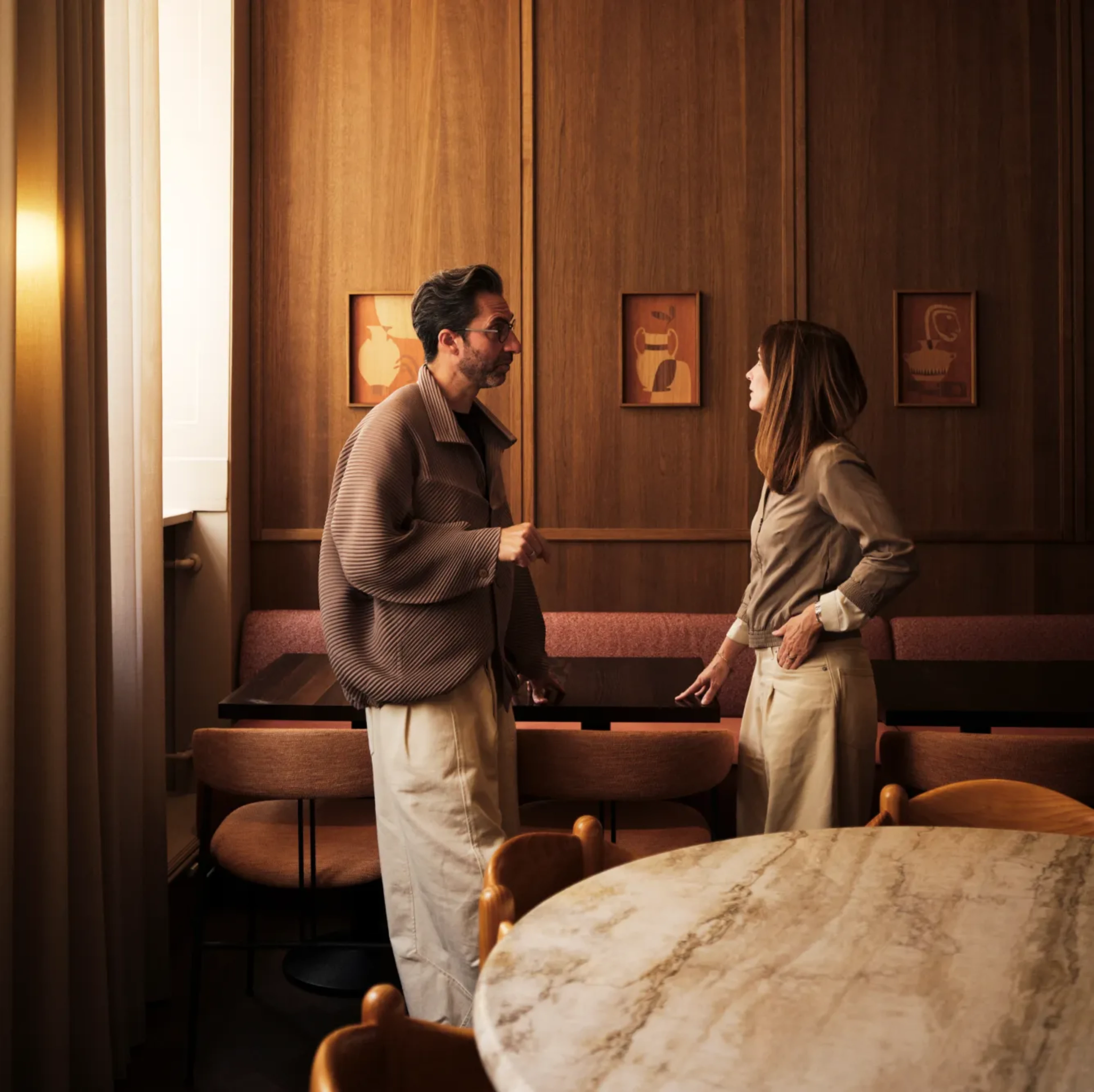
There is a particular quality to the work of Stine Gam and Enrico Fratesi — a studied quietness, an insistence that objects earn their place. The Copenhagen-based studio, now with a growing presence in Seoul and Tokyo, has long navigated the space between architecture and furniture, between Danish restraint and Italian expressiveness.
We sat down to discuss what draws them to historical companies, how they think about sound in hospitality spaces, and why the best proof of longevity is a fourteen-year-old asking for a forty-year-old object.
"Having a Bang & Olufsen piece in your house, you could somehow imagine what it would be like to live in the future. A kind of time travel device."
Enrico Fratesi, partner and co-founder of GamFratesi
Personal connection and heritage
Bang & Olufsen has always lived at the intersection of technology and daily life — and it became something of a synonym for Danish design. Do you have a personal memory with the brand that defined your perception of it, and did that shape how you approached the collaboration?
“I think we can each tell our own true story”, says Stine, “because we come from two very different cultures. For me, it goes a long way back. My grandparents had the stereo, the record player; it was simply part of daily life. Bang & Olufsen has always felt deeply woven into ordinary Danish homes. So, when they invited us to work on a new speaker, it felt genuinely special - working with something that carries such a long history, such personal memory”.
Enrico nods, and chimes in: “For me it was different. When I was young, Bang & Olufsen felt like an object from the future, unlike anything else. And unlike Stine's experience, it wasn't something you found in many houses in Italy. It was rare. When you entered a home that had a Bang & Olufsen product, you just looked at it and thought: wow. It was a mix of the cultural sophistication of whoever owned it, and something that seemed projected entirely forward into music, into sound. A dream object”.
"When people are staying in a luxury hotel, the aspiration should be to make them feel they want their own home to be just the same."
Stine Gam, partner and co-founder of GamFratesi

Hospitality and the feeling of being home
You described your recent project for PURO Old Town Hotel in Warsaw as a continuous, fluid social landscape. Where does sound sit within that kind of interconnected environment? How do you choreograph audio as part of an atmosphere rather than simply placing an object?
“Today, especially in hospitality, all the senses need to be considered”, states Enrico. “A few years ago, the conversation was purely about architecture, but today there is fragrance, light, sound: a combination of elements that makes the guest experience genuinely 360 degrees”. Stine nods and adds: “Sound is an extremely important part of that. It helps to deepen the experience, to direct the energy of a space. And with Bang & Olufsen speakers, we find something that fits that purpose perfectly, because it’s not simply an object performing a technical function, it’s also beautiful to look at”.
“We always try to bring an aesthetic that feels residential, says Enrico. “When people are in a hotel, the aspiration should be to make them feel at home. That is what we tried to do in Warsaw: vintage pieces found in Denmark and brought there, mixed with beautiful modern technology - a perfect selection of objects that together read like a very tasteful private residence”. “And then within all of that”, continues Stine, “in every room - whether a standard room or a suite - there is a portable Bang & Olufsen speaker. Because in a home you don't just interact with the music; you interact with the beautiful object itself. That relationship was one of the reasons Bang & Olufsen felt like a natural partner for the project”.
Bio
GamFratesi was founded in Copenhagen in 2006 by Stine Gam and Enrico Fratesi. The studio's work spans furniture, interiors, and spatial design for clients including Fritz Hansen, Molteni &C, Royal Copenhagen, Minotti, Louis Poulsen, and Hermès. The Beosound A5 was developed in collaboration with Bang & Olufsen
Sound in public and commercial spaces
In public spaces - restaurants, lounges, showrooms - do you feel that audio can actively shape how people gather and connect? And do you find that sound still tends to arrive too late in the design process?
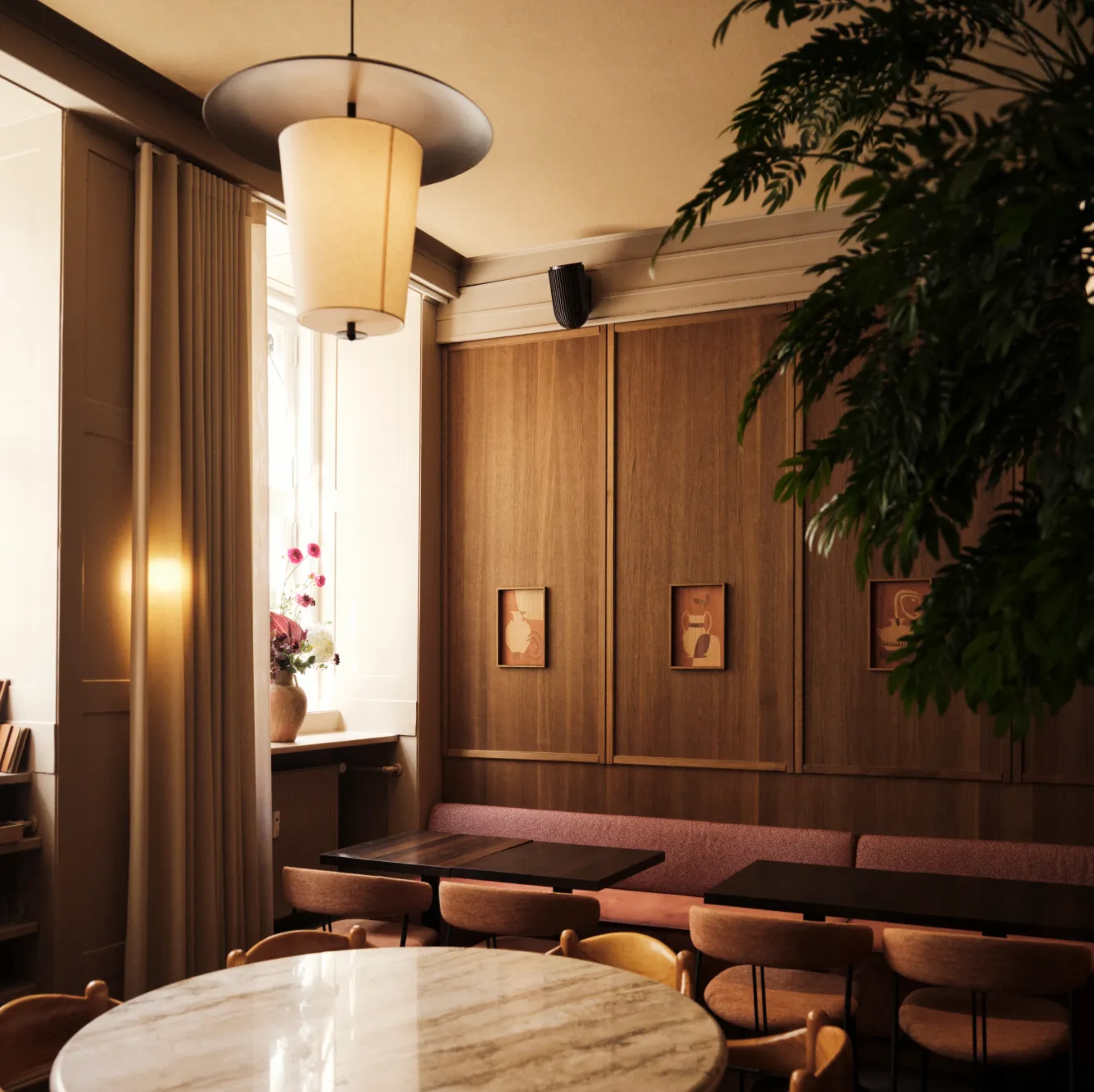
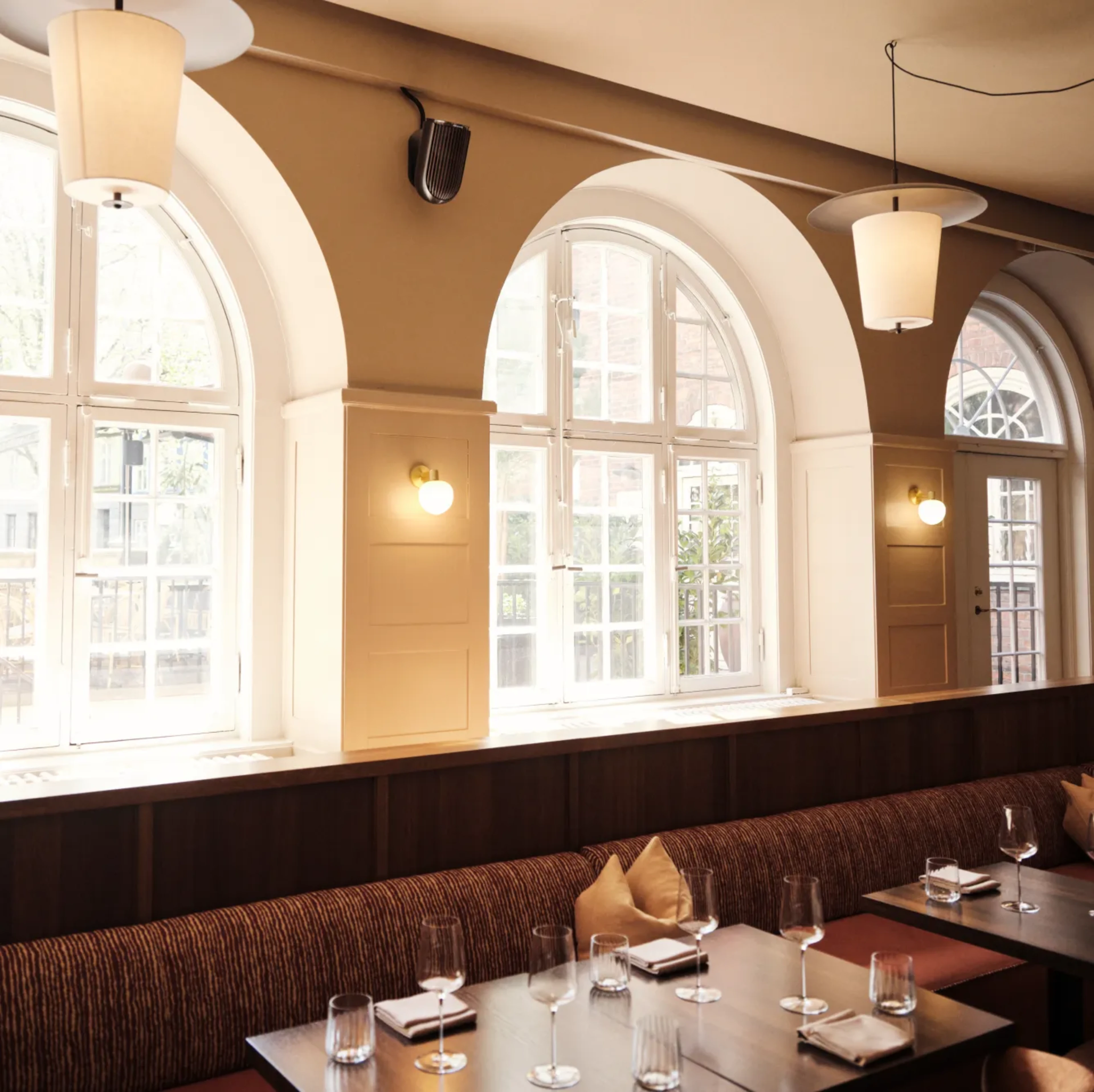
Enrico shows no hesitation: “Absolutely. If a public space has bad sound, it is a terrible experience. Sound plays an extremely important part in hospitality, and when you can combine sound and aesthetics, it is no longer merely functional. The object becomes part of the project. I think of restaurant Epicurus, in central Copenhagen, and the way the Beolab 8 speakers are integrated with the surrounding wooden panels, with the finishes and colours of the space. You almost feel like the speaker has been designed specifically for that room, because the key materials of the space are also present in the speaker. That is working at a level of coherence that is very difficult to achieve”.
"A fourteen-year-old asking for a forty-year-old object. To me, that is a testament to the enduring appeal of the product and its design."
Enrico Fratesi, partner and co-founder of GamFratesi
On the question of planning and timing, Stine has a clear position: “I don't think it is done intentionally. It happens because of a lack of awareness”, she declares. “Designers and architects think of it more like a finishing element: we need a chair, we need a lamp, we need a speaker. But it is not that. It is something that needs to run parallel to the project from the beginning, in the same way that other structural decisions do. If it comes too late, technically you simply cannot achieve certain things”. Bang & Olufsen is taking on the challenge to educate professional designers and specifiers on this aspect: not to say that sound is just an add-on at the end of the project, but that it is something which starts alongside all the other streams.
Longevity, natural materials and the proof of time
You have spoken about how materials age, how spaces and objects evolve. How do you see longevity playing out when technology is part of the equation? And do you think there is a further evolution ahead for these conversations?
“We fundamentally see two different paths”, says Enrico. “One is technological longevity: designing an object that can be repaired, updated, that leaves room for new technology to be integrated. I believe it will become the standard for everything we make. Bang & Olufsen has explored many of these principles over the years and has been part of the broader industry discussion around product longevity”.
Then there is the purely aesthetic, design-focused path. “Everybody says they want to make a classic, but very few succeed. It requires something genuine in the collaboration between designer and manufacturer. Our son is fourteen years old, and as a gift for his confirmation he asked for a Beogram 4000. A vintage turntable, while all his friends were asking for smartphones. Think about that: an object more than forty years old. To me, that is a testament to the enduring appeal of the product and its design".
Japan, Korea and the respect of craft
Your studio is increasingly present in Japan and Korea. What moves between those cultures and your work here in Scandinavia, and how might those influences shape a future product with Bang & Olufsen?
“We are very connected to Japan especially”, says Stine. “I lived and worked there as a student. We worked for Hermès for a long period designing their window displays, and then furniture with companies of very old tradition and craftsmanship. The culture fascinates us deeply. Design-wise, it reflects many of the same values as Denmark: craftsmanship, respect for natural material, restraint. It is very easy for us to take it in and bring it back. Japan feels resilient to trends in a way that I find admirable. There is a more considered relationship to time. Things are not rushed; the decision-making is thoughtful, and I think that suits design as a discipline”.
According to Enrico, Korea is different: “It’s more dynamic, more exposed to trends and fashion. Which brings its own energy, but can also be challenging, because as Stine says good design requires time. I learn a great deal there, particularly from working with traditional manufacturing craftsmanship. There is so much honour in what they do. And if you approach it with the same respect - for the environment, for the craft, for their individual story - then you bring an honest dimension of craftsmanship.